
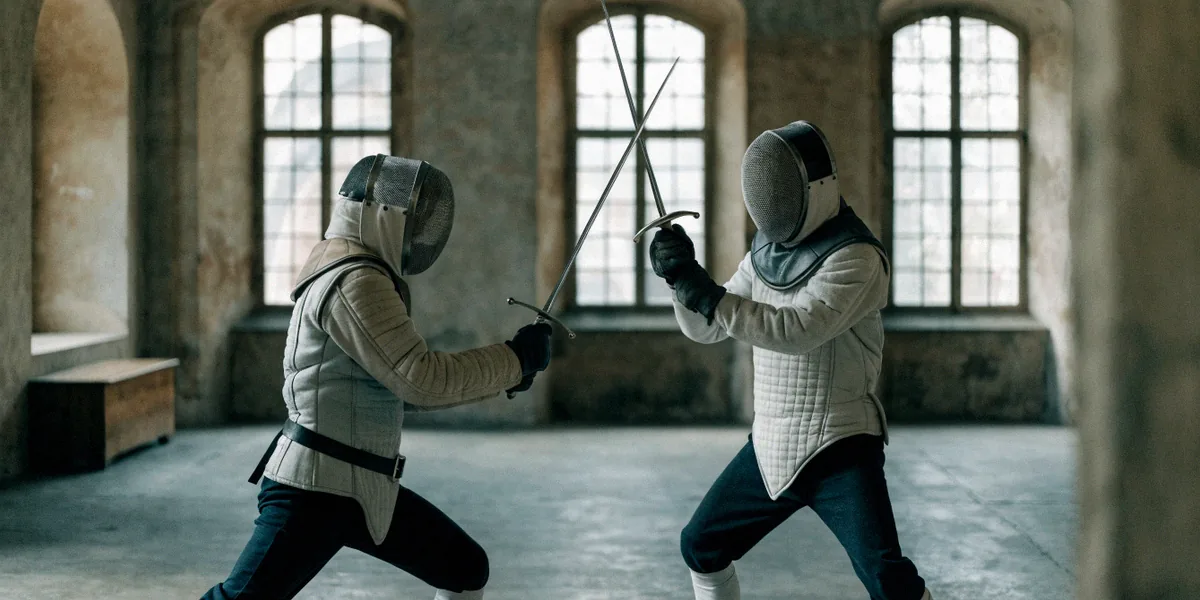
Safety in Historical Fencing: Rules and Protective Equipment
I still remember the first time I took a sword to the knuckle during sparring. It was a glancing blow, nothing serious, but the sting stayed with me for days. What struck me most was how quickly the session stopped, how calmly our instructor checked my hand, and how many layers of protection had already softened the impact. That moment taught me more about safety than any lecture could: the gear worked, the rules worked, and the culture of control worked. At our club in Jyväskylä, Finland, that culture is what lets us swing steel at each other without ending up in A&E.
Why Safety Is Non-Negotiable in Historical Fencing
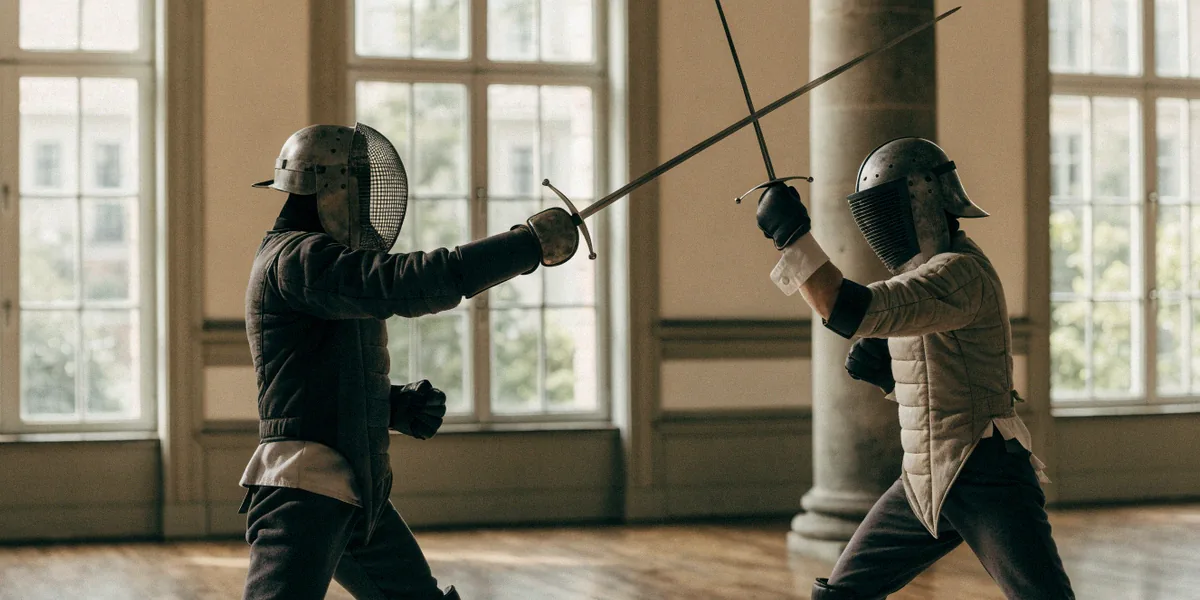
Historical fencing involves real weapons, real speed, and real bodies moving unpredictably. Pretending otherwise would be dishonest. Yet with proper protocols, it is statistically safer than football, ice hockey, or even a casual game of five-a-side. The difference lies in preparation: inspected equipment, controlled drills, and a shared understanding that nobody is here to prove anything at someone else’s expense. Our club in Jyväskylä follows strict safety standards modelled on established European practices, and we expect every member, from first-timers to veteran sparring partners, to treat those standards as the foundation of every session.
Common Injuries and How to Prevent Them
Most injuries in historical fencing are minor: bruised fingers, sore wrists, the occasional twisted ankle. More serious incidents usually trace back to worn equipment, fatigue, or a lapse in control. Prevention is straightforward. We inspect weapons before every session, enforce mandatory gear, and stop training the moment someone looks exhausted or frustrated. Warm-ups matter too; a cold shoulder does not react as fast as a warm one.
The Role of Mutual Respect and Control
Control is not the same as slowness. It means delivering a technique with enough precision that your partner can respond safely. We train this deliberately, starting with slow drills and gradually increasing speed only when both fencers are comfortable. Respect runs through everything: respecting your partner’s limits, respecting the referee’s calls, and respecting the fact that a training hall is not a tournament final. Ego causes more injuries than steel ever does.
Essential Safety Rules for Every Session
Every session at our club follows the same baseline rules, and they apply regardless of experience level. We reference the British Federation for Historical Swordplay (BFHS) guidelines as a UK benchmark, since they are widely respected and practical. The core rules are simple:
- Always wear the required protective gear before stepping onto the floor.
- Inspect every weapon and piece of equipment before use.
- Follow the referee’s instructions without argument.
- Stop immediately when you hear ”halt” — no exceptions, no finishing the attack.
- Report any damage, injury, or concern to an instructor straight away.
Pre-Sparring Checks and Weapon Inspection
Before any sparring bout, we check blades for nicks, cracks, or loose fittings, and we test masks, gloves, and jackets for wear. A blade that fails inspection goes out of rotation until it is repaired or replaced. This takes a few minutes and has prevented countless avoidable injuries.
Communication and Stop Signals
”Halt” is the most important word in the training hall. It overrides everything. We also use hand signals in noisy environments and agree on a tap-out signal for grappling or close-quarters work. If you are unsure whether your partner is okay, stop and ask. Nobody has ever been criticised for checking.
Protective Gear: What You Need and Why
Gear is not optional, and it is not a fashion statement. Each piece exists because someone, somewhere, learned the hard way. Mandatory equipment for steel sparring at our club includes:
- A fencing mask rated to at least 1600N, which is the standard for historical fencing and protects against broken blades as well as direct hits.
- A padded jacket or gambeson covering the torso and arms.
- Heavy-duty gloves with reinforced fingers.
- Elbow and knee pads.
- Groin protection for all fencers, regardless of gender.
- A throat guard or rigid collar.
For ratsumiekkailu (mounted fencing), additional safety gear is required, including a certified riding helmet, reinforced leg protection, and equipment suited to working around a moving horse. Mounted combat adds variables that ground fencing simply does not have, and our kit list reflects that.
Head and Face Protection
The 1600N mask rating is not a marketing number. It reflects how much force the mask can absorb from a broken blade tip, which is the worst-case scenario in fencing. We also recommend back-of-head protection for heavier weapon forms.
Body and Limb Protection
Jackets, gloves, and pads absorb the cumulative wear and tear of regular training. Even a light synthetic sword can bruise a forearm, and steel can do considerably more. Buy gear that fits properly; loose gloves and ill-fitting masks cause as many problems as they solve.
Special Considerations for Mounted Combat
Ratsumiekkailu demands a different mindset. You are balancing, steering, and fighting at the same time, and your horse is a living partner with its own safety needs. We require additional gear, additional supervision, and additional patience before anyone progresses to mounted sparring.
Training Safely: From Alkeiskurssi to Advanced Sparring
Beginners at our club start with foam or synthetic swords in controlled drills. The alkeiskurssi (beginner course) prioritises safety before free sparring, and nobody is pushed into contact work before they are ready. We teach footwork, distance, and basic techniques first, because those skills reduce injuries more effectively than any piece of equipment. Vaistojousiammunta (instinctive archery) is run separately and follows its own range safety rules, including clear firing lines, designated waiting areas, and strict commands for shooting and retrieving arrows.
Progression from Drills to Free Play
Progression is gradual. Drills become slow sparring, slow sparring becomes controlled free play, and only then do we introduce full-speed bouts. Each stage has clear criteria, and instructors decide when a fencer is ready to move up.
Supervision and Instructor Qualifications
Every session has a qualified instructor present. Our instructors train regularly, keep their first-aid knowledge current, and follow the same safety standards we ask of members. Supervision is not about mistrust; it is about having someone experienced who can step in before a small problem becomes a big one.
UK Safety Standards and Resources
UK fencers have access to some of the best safety resources in Europe. The British Federation for Historical Swordplay (BFHS) publishes detailed guidelines on equipment, conduct, and insurance, and many UK clubs build their safety policies around them. Our team references the BFHS guidelines regularly, and we encourage members travelling to the UK to train with affiliated clubs. Events such as Swordfish in Gothenburg are attended by UK fencers and provide an excellent opportunity to see safety practices in action at an international level.
BFHS Guidelines and Insurance
The BFHS framework covers mask ratings, weapon inspection, sparring conduct, and insurance requirements. It is a practical model that any club can adapt, and we have borrowed heavily from it when shaping our own rules.
Cross-Training with UK Clubs
Training with UK clubs exposes fencers to different sparring cultures and safety habits. It is one of the fastest ways to improve, and it reinforces the idea that safety standards are shared across borders rather than being a local quirk.
FAQ
Is historical fencing safe for complete beginners?
Yes, when it is taught properly. Beginners start with foam or synthetic weapons, controlled drills, and full protective gear. Our alkeiskurssi is designed to build skills and safety awareness before anyone takes part in free sparring.
What is the minimum protective equipment I need?
At minimum, you need a 1600N-rated fencing mask, padded jacket, heavy gloves, elbow and knee pads, groin protection, and a throat guard. For ratsumiekkailu, additional gear including a certified riding helmet is required.
Do I need my own equipment to start?
No. We provide club equipment for beginners, including masks and synthetic swords. As you progress, we can advise on buying your own gear that meets our safety standards.
How do you handle injuries during training?
Every session has a qualified instructor with current first-aid training. If an injury occurs, training stops immediately, the fencer is assessed, and we follow our incident reporting procedure. We would rather cancel a bout than risk making an injury worse.
Can I train with UK clubs using the same gear?
Generally yes, provided your gear meets BFHS standards. The 1600N mask rating and padded jacket requirements are widely recognised, so equipment that passes inspection at our club in Jyväskylä will usually be accepted by UK clubs as well.
Safety in historical fencing is a shared responsibility. The rules, the gear, and the culture of control exist so that everyone, from first-time beginners to experienced sparring partners, can enjoy the art without unnecessary risk. Whether you are training with us in Jyväskylä, visiting a UK club, or watching bouts at Swordfish in Gothenburg, the same principles apply: respect your partner, inspect your kit, and stop when someone says halt.