
Miekkailu ja kunto: mitä laji tekee keholle
What actually happens to your body the first time you pick up a sword at our club in Jyväskylä? Most newcomers arrive expecting to learn technique — a parry here, a cut there — and leave the first session surprised by how much their legs, core, and lungs have done. Historical fencing looks elegant and controlled from the sidelines, but underneath the choreography sits a genuine full-body workout. In this article we break down what historiallinen miekkailu does to the body, how our related disciplines of ratsumiekkailu and vaistojousiammunta fit in, and what you can expect from your first alkeiskurssi with us.
The full-body workout hidden in historical fencing
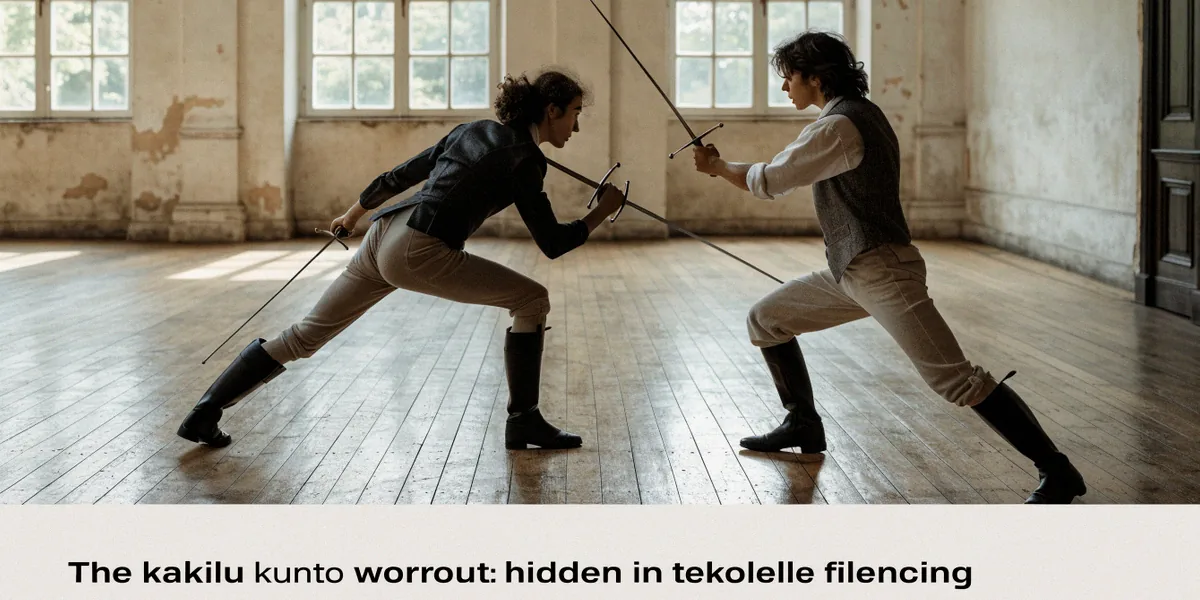
A typical bout in our salle mixes short explosive actions with longer periods of movement, which places historiallinen miekkailu firmly in the mixed aerobic and anaerobic category. You might hold a guard, circle, then launch a three-second flurry of cuts and footwork, then reset. That stop-start rhythm is exactly the kind of interval pattern sports scientists associate with improving both cardiovascular capacity and muscular endurance.
Cardiovascular demands of a bout
Heart rates during sparring commonly sit in the 70–85% of maximum range, similar to a brisk run or a hard circuit class. Because bouts are short, you accumulate time in higher-intensity zones without the monotony of steady-state cardio. Over a two-hour session, that adds up to a meaningful aerobic stimulus — one reason members tell us their general fitness improves within weeks.
Muscular engagement from footwork to blade work
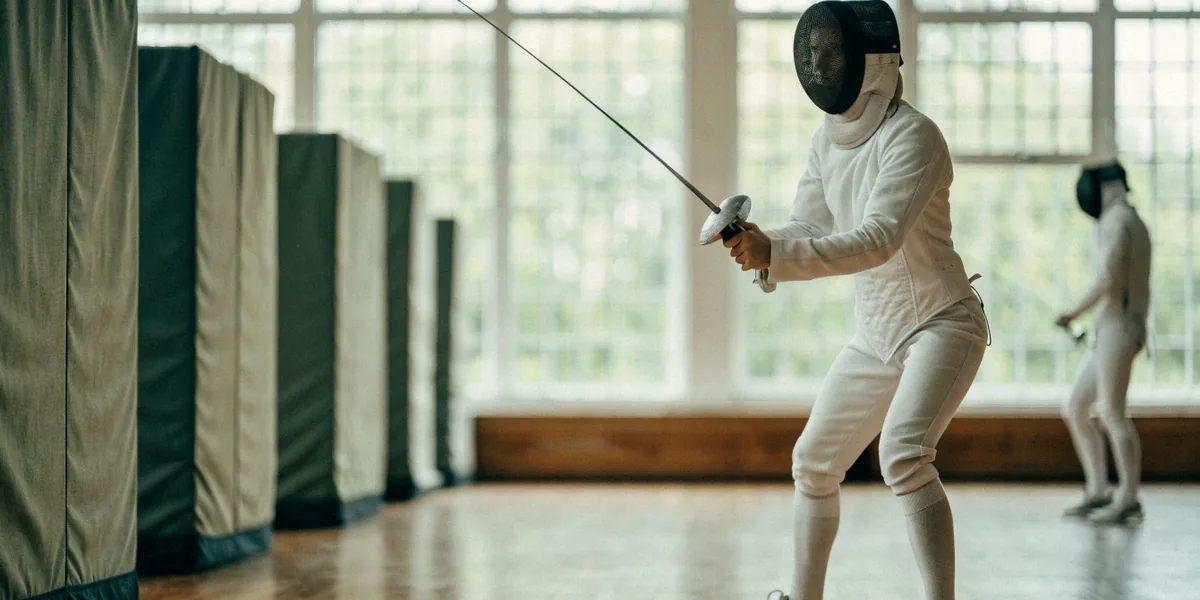
From the moment you step into a guard, your body is working in a semi-squat. Calves, quads, glutes, and hamstrings hold you stable while you advance, retreat, and lunge. Meanwhile, the sword arm is never passive: gripping, extending, and recovering the blade recruits the forearm, shoulder, and upper back. It is a genuine full-body chain, not an arm-only activity.
Building strength and mobility through swordplay
The British fencing tradition — with its long history of sabre, smallsword, and military swordplay — has always treated footwork drills as conditioning, not just technique. Modern sports science backs this up: repeated lunges and recoveries build functional strength in patterns you actually use, rather than isolated gym movements. Our drills borrow from that lineage while staying grounded in current coaching practice.
Core stability and posture
Holding a guard while an opponent pressures your blade forces your trunk to work constantly. Deep abdominal and lower-back muscles switch on to keep you upright and balanced. Members often notice better posture in daily life after a few months — a direct result of this anti-rotation and bracing work.
Shoulder and wrist conditioning
Sword weight is modest, but the repetition is not. Hundreds of cuts, parries, and thrusts per session gradually condition the rotator cuff, forearms, and wrists. We progress load carefully, starting with lighter trainers before moving to steel, so the joints adapt alongside the muscles.
Ratsumiekkailu and vaistojousiammunta: cross-training benefits
Our club is unusual in offering ratsumiekkailu (mounted fencing) and vaistojousiammunta (instinctive archery) alongside foot fencing. Each discipline reinforces the others. For context, we look to organisations like the British Horse Society for rider fitness standards and Archery GB for shooting technique and conditioning guidance.
Equestrian fitness for riders
Riding demands a deep, quiet seat, strong inner thighs, and independent hands — qualities that transfer directly to swordplay on foot. The British Horse Society emphasises rider fitness as a welfare issue for the horse, and we take the same view: a fit rider is a kinder, more effective rider.
Archery-specific strength and focus
Drawing a bow repeatedly builds back, shoulder, and grip strength, plus the kind of quiet focus that helps in a fencing bout. Archery GB coaching stresses consistent form under fatigue, which is exactly what we want when a sparring session runs long.
What to expect on our alkeiskurssi in Jyväskylä
Our alkeiskurssi is designed for complete beginners, no equipment or prior experience required. Because the Finnish climate keeps us indoors for much of the year, all sessions run in heated training facilities in Jyväskylä — no outdoor gear needed until you progress to summer events.
Warm-up and conditioning
Every session starts with a structured warm-up: joint mobility, light cardio, and dynamic stretches targeting hips, shoulders, and ankles. We then move into footwork patterns and simple conditioning circuits before touching a sword.
Progression to sparring
Over the course, you will typically move through:
- Stance, guard, and basic footwork
- Core cuts, parries, and thrusts with training weapons
- Paired drills at controlled speed
- Supervised sparring with protective gear
By the end, most students are comfortable sparring safely and know how to warm up and cool down on their own.
Injury prevention and recovery for historical fencers
Fencing has a good safety record when taught properly, but strains do happen — usually from skipping warm-ups or ramping intensity too fast. We follow NHS guidance on exercise, which recommends building activity gradually and including rest days, and we consult principles from the Chartered Society of Physiotherapy when designing our warm-up and recovery routines.
Common strains and how to avoid them
The most frequent complaints we see are calf tightness, wrist tendon irritation, and lower-back fatigue. All three respond well to consistent mobility work, sensible progression, and honest communication with coaches about niggles before they become injuries.
Rest and mobility work
We encourage at least one full rest day between hard sessions, plus short daily mobility routines for hips, thoracic spine, and shoulders. Cool-downs are not optional in our club — ten minutes of easy movement and stretching at the end of every session.
How fitness gains translate beyond the salle
The fitness you build with historiallinen miekkailu does not stay in the training hall. Sport England’s activity guidelines and the UK Chief Medical Officers’ recommendations both highlight the value of regular moderate-to-vigorous activity for long-term health, and fencing fits neatly into that picture.
Mental health and stress relief
Sparring demands total attention, which makes it a natural antidote to work stress. Members consistently report better mood and sleep on training days — a benefit that shows up in the research on martial arts and physical activity more broadly.
Functional fitness for daily life
Better balance, stronger legs, and improved posture make everyday tasks — carrying shopping, climbing stairs, lifting children — noticeably easier. It is fitness that shows up in ordinary moments, not just in the salle.
Historical fencing is an accessible, full-body fitness journey that welcomes complete beginners. Whether you come for the swordplay, the horses, or the bow, our club in Jyväskylä offers a structured, friendly path from your first alkeiskurssi onwards. Come try a session and see what your body can do.
Usein kysytyt kysymykset
Do I need to be fit before starting an alkeiskurssi?
No. Our beginner course assumes no prior fitness or fencing experience. We build intensity gradually, and you can work at your own pace while coaches adjust drills to your level.
What equipment do I need for my first session?
Just comfortable sportswear and indoor training shoes. We provide all swords, masks, and protective gear during the alkeiskurssi, and we advise on personal equipment only once you decide to continue.
Can I try ratsumiekkailu or vaistojousiammunta without prior riding or archery experience?
Yes. Both disciplines have their own introductory pathways. For ratsumiekkailu we coordinate with local stables, and for vaistojousiammunta we start with low-poundage bows and close-range targets.
How often should I train to see fitness improvements?
Two sessions per week is a good starting point for most people, in line with general activity guidance. Consistency matters more than volume — regular training with proper rest beats occasional intense efforts.